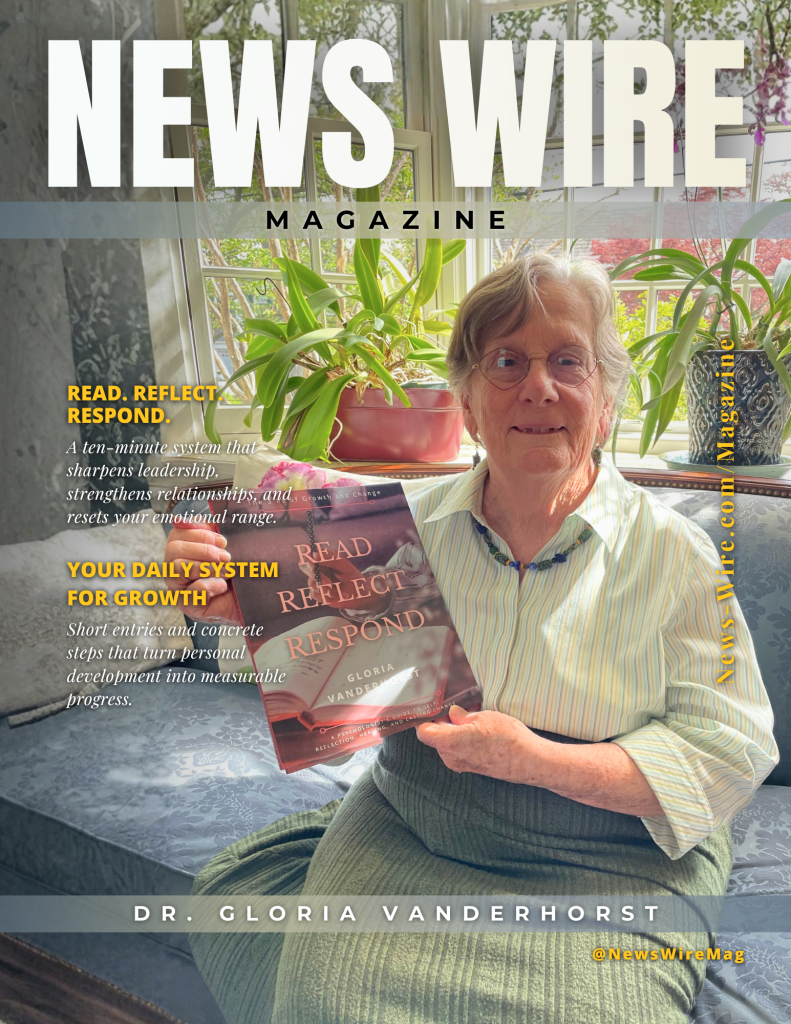
Dr. Gloria Vanderhorst: Read, Reflect, Respond—A High-Performance Playbook for Leaders, Parents, and Partners
Successful professionals juggle revenue, teams, clients, marriage, and kids—often at full speed. You can scale a company and still feel stuck at home. You can lead a room and still stumble in your living room. The gap is not intelligence. The gap is emotional precision and repeatable practice.
That is where Read, Reflect, Respond – The 3 Rs of Growth and Change by Dr. Gloria Vanderhorst fits your life. It gives you short, specific moves that build connection and control. It turns vague “work on yourself” goals into ten-minute reps you can measure. It meets you where you are. It moves you where you want to go.
Why Leaders Should Pay Attention to Dr. Gloria Vanderhorst
Dr. Gloria Vanderhorst has spent decades helping people grow—children, teens, adults, couples, and families. She speaks in plain language. She trades theory for outcomes. In conversation, she is direct. She challenges unhelpful beliefs. She pushes for action. She respects time and attention. High performers respond to that mix.
Her message is simple. You are healthier and more effective when you engage the full range of human emotion with clarity. When you name what you feel, you regain choice. When you regain choice, you lead better, parent better, and love better. Read, Reflect, Respond – The 3 Rs of Growth and Change by Dr. Gloria Vanderhorst is the tool that makes this real in ten minutes a day.
The Real Problem: Suppression Looks Like Strength Until It Fails
Many men learned one move—power through. That works in sprints. It fails in seasons. Repression bleeds into your tone. It shows up as short answers, sharp edges, and avoidant decisions. Anger becomes the default because it is the only feeling that seems “allowed.” Everything else hides under it: hurt, fear, shame, envy, fatigue, grief. When all you can access is anger or numbness, you lose range. Range drives relationships. Range drives leadership.
You see the costs. At work, conflict lingers. Feedback becomes personal. Meetings run long because no one says what is true in clean words. At home, the marriage turns into logistics. Kids escalate to get attention. Your body starts carrying what your mouth will not say. You feel it as tension, headaches, burnout, or a vague sense of emptiness after “wins.”
Precision fixes this. Precision is learned. Read, Reflect, Respond – The 3 Rs of Growth and Change by Dr. Gloria Vanderhorst teaches precision fast and keeps it practical.
How the Book Works in the Real World
The structure is straightforward. You open to a short entry. You read. You turn a facing page that is deliberately blank. You reflect. You capture what rises—words, sketches, arrows, maps, fragments. You choose a next step. You respond. Ten minutes. Done. Tomorrow, you do it again.
The blank page matters. Your brain does not store life only in sentences. It stores images, sensations, and action impulses. Lines can trap you in tidy paragraphs and half-truths. A blank canvas gives you access to what you actually feel. That access is the point. Once you have it, you can move.
Leaders appreciate this format because it fits a calendar. Parents appreciate it because kids understand concrete steps. Couples appreciate it because it shifts tone fast. Small steps compound. Momentum sticks.
What High Performers Get Wrong About Emotion
Emotion is not weakness. It is information. It tells you what matters and where boundaries sit. It tells you where trust is thin and where meaning is strong. The goal is not to “get emotional.” The goal is to harvest data and act with skill.
The right question is not “How do I avoid feeling this?” The right question is “What is the first feeling under this reaction, and what action honors it?” The book trains that move through repetition. Read. Reflect. Respond. You build a reflex. You stop letting anger drive the wheel. You start making decisions you respect.
Executive Playbook: Use the Three Rs to Lead Without Leaks
Start Monday morning with one entry from Read, Reflect, Respond – The 3 Rs of Growth and Change by Dr. Gloria Vanderhorst. Read once. Reflect for three minutes. Name one trigger from last week that bothered you more than it should have. Write the first feeling under the irritation. Choose a step that keeps your standards and your humanity.
In your stand-up, model clean language. State the goal. Name one feeling in one sentence in a neutral tone. Set the plan. You are not venting. You are clarifying. Your team will copy your regulation and your precision.
Midweek, run a private review. Pick a conflict you sidestepped. Reflect again. Ask what fear kept you quiet or made you too sharp. Respond with a direct conversation that holds respect and a clear outcome. Friday, close a loop you avoided. Recognition counts as closure. So does a hard decision. The point is to end the week with fewer loose threads and less residue.
This is not a therapy session. This is an operating rhythm. Ten minutes. One entry. One behavior. Repeat. Results show up as faster alignment, fewer blowups, tighter execution, and a calmer baseline across the team.
The Father Advantage: Raising Boys Who Keep Their Range
Boys arrive with wide emotional range. Culture narrows it. That narrowing steals connection. It also steals resilience. Your son learns recovery when you normalize feeling and teach action. He does not need a perfect speech. He needs a model and a process.
Use the book for a daily micro-ritual. After school, open to any page in Read, Reflect, Respond – The 3 Rs of Growth and Change by Dr. Gloria Vanderhorst. Read a paragraph out loud. Ask for one word that matches the day. Reflect for one minute. Respond with one small step for tomorrow. “I will ask for help in math.” “I will take three breaths before I swing.” Keep it tight. Keep it positive. End with a fist bump or a quick hug. You are wiring his nervous system for clarity and recovery.
On the field, do not shame tears or shut down. Teach sequence. Miss → recover → reflect. First you chase the ball. Then you reset. After the game, you reflect and respond. That order builds both strength and awareness. It is not soft. It is smart.
Marriage That Feels Like Partnership Again
Many couples become roommates with shared responsibilities. Love turns into schedules. Arguments repeat. Repairs stall. You want simple practices that change the tone without adding heavy work.
Commit to a twenty-minute face-to-face block five days a week. No devices. Sit close enough to read eyes and posture. Start with one page from Read, Reflect, Respond – The 3 Rs of Growth and Change by Dr. Gloria Vanderhorst. Read quietly. Reflect for two minutes on paper. Then speak in short turns. Name one real feeling and one real desire. Respect each other’s air time. End with a thirty-second hug. Long enough to feel a shift. Short enough to keep it consistent.
When a fight starts, pause. Identify the first feeling under the spike. It might be “I feel dismissed,” “I feel alone,” or “I feel overwhelmed.” Use a calm voice. Make one ask. “Please look at me when I’m talking.” “Please give me ten minutes before we decide.” Then choose a Respond step. Set a time to resolve. Take a short break if needed. Come back to the book later that night for a quick debrief. This keeps conflict productive. You stop looping. You start repairing.
Teachers, Coaches, and Community: One Language, Better Outcomes
Kids regulate faster when adults use the same language across home, school, and sports. The three Rs give you that language. A teacher can read a short piece in homeroom, reflect with two questions, and ask for a one-line response students can use next time a conflict hits. A coach can adopt the same pattern before practice or after a game. Parents who echo it at dinner close the loop. Consistency builds safety. Safety builds growth.
Men’s Groups That Respect Time
Many men will not join a group that turns into open-ended therapy. They will show up for a disciplined hour with a clear arc. Use the book as the anchor. Ten minutes of silent reading. Fifteen minutes of private reflection. Thirty minutes of timed shares with no cross-talk. Five minutes to state one action for the next forty-eight hours. That is it. You get depth without drift. Momentum without performance.
Why the Three Rs Work for Busy People
Short entries. Blank response pages. Clear prompts. One action. It strips change down to the minimum effective dose. You do not need to wait for motivation. You follow the structure. The structure carries you through days when you feel flat or pressed. The repetition teaches your body that it is safe to feel and safe to choose. That safety shows up in your tone, your stance, and your decisions. People around you feel the difference before they can name it.
Practical Scripts You Can Use Tonight
At work: “I felt dismissed in that exchange. Here’s what I need next time.” That is not soft. That is clear. It resets expectations without heat. If a deadline slips: “Impact is high. Let’s define the path. I will do this. You will do that. We will sync at noon.” That is leadership that combines standards with steadiness.
With your child: “I hear your frustration. I will not allow disrespect. We will talk in ten minutes and fix this together.” Later, run a quick Read, Reflect, Respond cycle with your child. Keep it short. Let them do part of the plan.
With your spouse: “I miss you. Sit with me for twenty minutes.” Then put the phone in another room. Do one entry from the book. Touch hands while you talk. End with a hug.
The Health Case for Emotional Precision
Chronic stress drains energy, focus, and patience. You feel it as tightness, fatigue, or restless nights. You try to outrun it with productivity. It follows you. Naming a primary feeling reduces intensity. Choosing a small next step gives your nervous system a path forward. That combination lowers friction in your body. You gain margin for work and family without heroic willpower. You gain endurance.
Use the book as a daily release valve. If you had a hard call, take five minutes with a page from Read, Reflect, Respond – The 3 Rs of Growth and Change by Dr. Gloria Vanderhorst. Write three words about the call. Draw one arrow from what you felt to what you want to do next. Take one step you can finish in fifteen minutes. Send the email. Schedule the follow-up. Make the repair. Release the residue.
How to Install the Habit in 30 Days
Week one: pick a ten-minute slot you can protect. Morning works for some. Lunch works for others. Evening works for couples. Do one entry from the book every day. Keep it simple. Stop at ten minutes even if you want more. Success equals completion, not length.
Week two: add one Respond step at work daily. Do not make it huge. Make it visible. One direct conversation. One clear boundary. One clear “yes” or “no.” Track results in the book’s blank pages.
Week three: add a father–child micro-ritual after school. One feeling word. One small step for tomorrow. Keep it under five minutes. Praise effort and honesty.
Week four: add a weekly couple deep dive. Twenty minutes, face to face. One entry. Two short reflections. One ask each. One twenty-second hug to close. That rhythm will outlast motivation. It becomes part of your home operating system.
For Professionals Who Want More Support
Some patterns need a guide. If you find yourself repeating the same fight, shutting down in the same spot, or escalating in a way that feels automatic, pair the book with professional sessions. Dr. Gloria Vanderhorst draws on models that target emotion processing and connection. You bring real moments to the session. You workshop the next step. You keep the three Rs running between meetings. You turn insights into habits.
Stories That Stick
Dr. Vanderhorst has worked across ages and stages. She highlights the honesty of preschoolers. She points out how they still hold the full range of feelings and express them without shame. Adults can relearn that freedom with structure and safety. She also calls out a simple truth. Many men never learned the words they need. That is not a moral failure. That is a missing skill. Skills can be taught. The book is a training ground for those words and the actions that follow them.
She also addresses the cost of macho scripts. “Be a man” often means “do not feel.” That script breeds isolation, explosive conflict, and poor health choices. The antidote is not performative vulnerability. The antidote is honest language and steady behavior. Read what is true. Reflect without spin. Respond with one concrete move. Repeat until it becomes the way you operate.
What Changes When You Commit
At work, you stop reliving the same meeting. You clear confusion faster. People know what you expect and why it matters. You hold standards without shaming people. You hold people without dropping standards. That combination keeps strong contributors engaged and clarifies fit for everyone else.
At home, small repairs start to land. You apologize without drama. You forgive without scorekeeping. You make eye contact during hard talks. You listen in full sentences. Your tone softens while your clarity sharpens. Joy returns in ordinary moments. Stress drops. Affection rises. You notice your spouse again. You notice your kid again. They notice you noticing, and they relax.
FAQ for Leaders, Parents, and Partners
Do I need to read the book in order? No. Start anywhere. Pick an entry that matches your day. Do the process. Move on.
What if I hate journaling? You are not writing essays. You are capturing signals. Use bullets. Use arrows. Use sketches. The blank page invites all formats.
How long does a session take? Ten minutes. Less if you get what you need early. Do not overcomplicate it. The win is consistency.
Is the book only for men? No. Women use it. Couples use it. Parents use it with teens. Leaders use it with teams. The three Rs are human, not gendered.
How soon will I notice results? Many people feel a shift the first week. Tension drops. Decisions get cleaner. Connection improves. Keep going for a month to turn it into a reflex.
The News Wire Magazine Take
We feature people who move the needle for high achievers in real life. Dr. Gloria Vanderhorst does that. She gives you a practice you can run today. She fits your schedule. She respects your goals. She pushes you to grow in the areas that earn compound returns—marriage, parenting, and leadership presence. Read, Reflect, Respond – The 3 Rs of Growth and Change by Dr. Gloria Vanderhorst belongs on your desk, not your shelf.