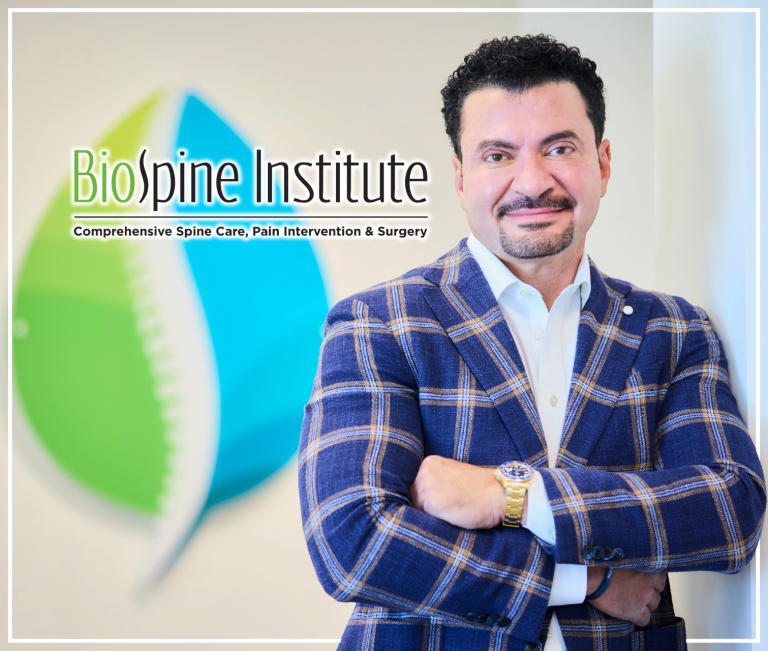
Chronic back and neck pain steals time, focus, and momentum from your life. When you carry that pain into every meeting, every trip, and every family moment, everything feels harder. This is where BioSpine Institute steps in. BioSpine Institute focuses exclusively on spine care, with a network of clinics and a dedicated surgery center that helps patients across Florida get back to regular activities with micro-invasive procedures and a clear, step-by-step treatment path.
This Spotlight Review walks you through what BioSpine Institute does, where its clinics are located, how its care model works, and what Dr. Hany Demian’s leadership brings to the table. If you lead a business, a team, or a busy household, your spine health matters. BioSpine Institute exists to help you keep going.
What Is BioSpine Institute?
BioSpine Institute is a spine-focused medical group that treats back and neck problems and nothing else: every system, every team member, and every clinic centers on spinal conditions. When you walk into BioSpine Institute, you enter a setting built around one mission: finding and fixing the real reason your spine hurts, using the least invasive approach that makes sense for your case.
The team sees patients with a wide range of spine issues, from simple disc problems to complex stenosis and nerve compression. Over the years, BioSpine Institute has completed tens of thousands of spine procedures. That volume matters because spine surgery and interventional pain work carry a learning curve. You want your surgeon and care team to live in this space every day, not once in a while.
Most procedures at BioSpine Institute take place in an ambulatory surgery center rather than a large hospital. Smaller incisions, targeted access, and same-day discharge are central to the model. The goal is simple: less trauma to healthy tissue, lower risk, and a faster return to walking, driving, working, and doing the things you enjoy.
Leadership Spotlight: Dr. Hany Demian
Strong medical brands rise and fall on leadership. At the head of BioSpine Institute stands Dr. Hany Demian, a physician who lives at the intersection of spine care, pain medicine, and regenerative therapies. He trained as a medical doctor, built a career spanning several countries, and has become known for his work in chronic pain, minimally invasive procedures, and multidisciplinary care models.
Before stepping into his leadership role at BioSpine Institute, Dr. Demian built and expanded multiple healthcare networks. His background includes trauma, surgery, and emergency medicine, followed by a deep focus on chronic pain and spine interventions. That range matters because spine problems rarely exist in a vacuum. Many patients carry old injuries, systemic health issues, or complex histories with pain medication. A leader who understands both the surgical and pain-management sides of the equation can design a better system.
Dr. Demian’s philosophy is direct. Identify the root cause. Use proper diagnostics. Respect conservative care. When needed, use interventional and surgical tools that give maximal relief with minimal disruption to a patient’s life. Under his leadership, BioSpine Institute continues to strengthen its protocols, expand its reach, and integrate new methods for managing spine-related pain and dysfunction.
BioSpine Institute Locations Across Florida
Access matters when you live with spine pain. Long drives and complicated travel can push patients to delay care. BioSpine Institute addresses this by building a network of clinics across Florida, backed by a dedicated surgery center in Tampa. You get regional access close to home, while your surgeon operates inside a tightly controlled, high-volume setting.
Tampa – Clinic and Surgery Center
Tampa serves as a central hub for BioSpine Institute. The main clinic is part of a corporate medical center, with the ambulatory surgery center nearby. Patients from across the state and from out of state often route through Tampa for surgery, complex evaluations, or second opinions. If your case calls for advanced micro-invasive procedures, there is a strong chance your surgery will take place here.
You can expect streamlined check-in, clear communication from the staff, and a process designed to move you from pre-op to discharge the same day in many cases. BioSpine Institute in Tampa coordinates with the satellite clinics for imaging, follow-up visits, and physical therapy referrals so you do not feel stranded once you head home.
Orlando Clinic and Surgery Center
The Orlando location offers full clinic services and access to micro-invasive spine procedures. Many patients in Central Florida prefer BioSpine Institute in Orlando due to its proximity to major highways, airports, and hotels. Inside the clinic, the focus remains the same: accurate diagnosis, conservative measures where appropriate, and a clean decision-making process that leads to targeted procedures when needed.
If you live in or around Orlando, this site can handle your consultations, injection procedures, and many surgical cases without the need to travel to another city.
Spring Hill (Brooksville Area) Clinic
For patients north of Tampa, the Spring Hill clinic offers easier access. Residents of Hernando County and surrounding areas do not need to drive into larger metro traffic to receive spine-focused care. The Spring Hill team follows the same BioSpine Institute protocols, with direct connection to the main surgery center where required.
Lakeland Clinic
The Lakeland clinic sits between Tampa and Orlando, serving Polk County and the surrounding region. This location offers evaluations, follow-up visits, and interventional procedures. For surgical needs, the Lakeland team coordinates closely with the Tampa and Orlando surgery centers so that your pre-op and post-op visits remain local while your procedure takes place at the optimal facility.
Fort Myers Clinic
Patients in Southwest Florida can access BioSpine Institute through the Fort Myers clinic. This location serves Lee County and the broader Gulf Coast area. If you live near Fort Myers, you can avoid long road trips for consultations or injections. Your care plan, imaging, and progress tracking all route through the same BioSpine Institute systems used statewide.
Deltona Clinic
The Deltona clinic serves patients between Orlando and Daytona Beach. If you live in Volusia County or the nearby corridor, this site gives you easier access to spine specialists without driving deep into a larger metro center. The clinic handles assessments, follow-up care, and interventional procedures, all linked to the broader BioSpine Institute network.
Sarasota Clinic
For patients in Sarasota, Lakewood Ranch, and Bradenton, the Sarasota clinic offers convenient access. Whether you need a first evaluation, an imaging review, or a discussion about treatment options, you can do that close to home. When surgery is required, your case is handled by the same surgical teams that operate in the main centers.
Across all of these clinics, BioSpine Institute uses shared protocols, shared records, and a unified approach to outcomes. No matter which site you visit, the care model and expectations remain consistent.
Conditions Treated at BioSpine Institute
BioSpine Institute treats a focused range of spine conditions. The list is broad enough to cover most common back and neck problems while remaining specific to the spine. If you struggle with any of the issues below, there is a strong chance BioSpine Institute has seen hundreds or thousands of similar cases.
Degenerative and Structural Problems
- Degenerative disc disease in the neck or lower back
- Bulging or herniated discs that compress nerves
- Spinal stenosis in the cervical or lumbar spine
- Spondylolisthesis and other forms of instability
Many people with degenerative disc disease feel deep aching pain, stiffness, or catching when they move. Others feel sharp pain down an arm or leg when disc material presses on a nerve. BioSpine Institute designs care plans that match imaging results with your actual symptoms, rather than treating pictures alone.
Nerve and Chronic Pain Conditions
- Sciatica and radiculopathy
- Chronic neck pain and chronic low-back pain
- Post-laminectomy pain or failed back surgery syndrome
If you have already gone through spine surgery elsewhere and still struggle with pain, you are not alone. BioSpine Institute often evaluates these complex cases. The team looks for scar tissue, unresolved nerve compression, instability, or other hidden drivers that previous care may have missed.
Trauma-Related Issues and Deformity
- Certain vertebral fractures
- Compression fractures related to osteoporosis
- Selected deformity patterns where micro-invasive correction is possible
BioSpine Institute does not claim to handle every deformity or trauma case. For some patients, a major hospital and large-scale reconstructive surgery remain the right option. The strength of BioSpine Institute lies in the careful selection of cases where micro-invasive methods can deliver strong results with lower risk and faster recovery.
The BioSpine Institute Care Pathway
When you first think about spine surgery, fear is normal. The word “surgery” brings up images of long scars, extended hospital stays, and long months away from work. BioSpine Institute builds its care pathway to remove that fear. The team follows a precise sequence: assess, try conservative care, use advanced interventional procedures when needed, and reserve micro-invasive surgery for cases that truly require it.
Step 1: Assessment and Diagnosis
Your first visit to BioSpine Institute centers on information. The care team reviews your medical history, your prior imaging, and your complete list of symptoms. They ask how long you have had pain, how it started, what makes it worse, and what you have already tried.
If you need fresh imaging, BioSpine Institute orders MRI, CT, or X-rays as appropriate. In some cases, targeted diagnostic injections help confirm which nerve or joint structure is causing your pain. The goal is a precise match between symptoms, physical exam findings, and imaging, so every next step is grounded in precise data.
Step 2: Conservative Care First
Surgery is rarely the first step at BioSpine Institute. The team uses physical therapy, home exercise plans, activity modification, and structured medication strategies to reduce pain and improve function. In some cases, chiropractic care or other non-surgical methods may support the strategy.
Medication plans remain focused and intentional. The team may use anti-inflammatory drugs, neuropathic pain agents, or short courses of other medications. Long-term narcotic use is not the default. The aim is to support healing and function, not to mask pain with no end in sight.
Step 3: Interventional Pain Procedures
If conservative efforts do not provide sufficient relief, BioSpine Institute offers a broad range of interventional options. These procedures bridge the gap between basic care and surgery. Many can be completed in an outpatient setting with short recovery times.
- Epidural steroid injections to calm inflammation around irritated nerves.
- Facet joint injections and medial branch blocks to pinpoint and treat pain from the small joints along the spine.
- Radiofrequency ablation to disrupt pain signals from painful spinal joints.
- Vertebral augmentation, such as kyphoplasty, for selected compression fractures.
These tools can reduce pain, confirm diagnosis, or delay the need for surgery. For many patients, they provide enough relief to return to work and daily life without any operation.
Step 4: Micro-Invasive Spine Surgery
When pain remains severe, function stays limited, and imaging shows a clear mechanical problem, BioSpine Institute considers micro-invasive spine surgery. This is where the group has built a strong reputation. The approach centers on small incisions, muscle-sparing techniques, and precise use of instruments and implants.
- Anterior cervical discectomy and fusion (ACDF) for nerve compression in the neck.
- Cervical disc replacement for selected patients who benefit from motion preservation.
- Lumbar decompression procedures that remove bone and ligament pressing on nerves.
- Lumbar fusion is indicated when instability or severe degeneration calls for structural support.
- Interlaminar stabilization devices for certain stenosis cases as an alternative to complete fusion.
Each micro-invasive procedure at BioSpine Institute aims to minimize trauma to healthy tissue while addressing the underlying mechanical problem. Many patients walk and go home the same day and see steady gains over the following days and weeks.
Step 5: Recovery and Long-Term Follow-Up
Recovery plans are tailored to the procedure and to the patient. The team at BioSpine Institute sets clear expectations about walking, driving, returning to work, and resuming hobbies. Patients receive instructions for wound care, pain management, medication tapering, and warning signs that require a call or visit.
Follow-up visits are scheduled at regular intervals to monitor healing and function. For patients who travel from outside the immediate area, telehealth visits and coordination with local providers help keep the process smooth.
Micro-Invasive Procedures and Neuromodulation
Not every spine case calls for structural change. Some chronic pain patterns respond best to neuromodulation. BioSpine Institute offers spinal cord stimulation for patients whose pain persists despite surgery or for those who are not strong candidates for further structural procedures.
In spinal cord stimulation, a device sends gentle electrical signals to the spinal cord. These signals alter how pain signals reach the brain. Many patients with leg pain, arm pain, or stubborn back pain achieve meaningful relief through this route. For the right patient, neuromodulation can reduce pain, lower medication needs, and improve sleep and function.
BioSpine Institute helps patients weigh the potential benefits, risks, and lifestyle implications of these devices. You receive a trial period before any permanent implant, so you can see how your body responds.
The BioSpine Institute Patient Experience
Clinical skill only gets you so far without a strong patient experience. BioSpine Institute pays close attention to how patients feel at every step. From the first call or online form submission through the last follow-up visit, the team aims to keep communication clear and timelines realistic.
Before Your First Visit
You start by scheduling an appointment with the nearest BioSpine Institute clinic. The staff helps you gather prior imaging, surgery reports, and medication lists. Insurance information is verified up front, so there are fewer surprises later.
If you travel from outside Florida, the staff can suggest timing windows that line up with consultations, imaging, and potential procedures. You walk into the clinic with a clear plan rather than guesswork.
The First Appointment
Your first visit includes a detailed conversation with a provider who focuses on spine care every day. Expect questions about your pain history, injuries, lifestyle, and goals. Physical exams focus on your spine, gait, strength, reflexes, and nerve function.
At the end of this visit, the team outlines a plan. That plan might include new imaging, physical therapy, a trial of targeted injections, or discussion of surgical options. You leave with a roadmap, not a stack of vague suggestions.
Day of Surgery
If you and your surgeon decide on a micro-invasive procedure, the day of surgery follows a tested pattern. You arrive at the BioSpine Institute surgery center, go through pre-op checks, and meet your anesthesiology and surgical team. The procedure itself often takes less time than many patients expect.
After surgery, you wake in a recovery area where nurses monitor your status. Once you meet specific milestones for walking, pain control, and stability, you go home the same day in many cases. A family member or friend drives you, and you leave with clear instructions and contact numbers.
Life After Surgery
No surgery can promise a perfect outcome, but many BioSpine Institute patients report significant reductions in pain and gains in function in the weeks after surgery. Typical stages include:
- First days: focus on rest, gentle walking, and wound care.
- First weeks: gradual return to basic daily tasks and light work.
- Later weeks: scaling up activity with guidance from your surgeon and physical therapist.
The team tracks your progress and adjusts plans as needed. If you hit a plateau or face new challenges, you do not face them alone.
Quality, Safety, and Transparency
Trust is earned. BioSpine Institute builds trust by staying transparent about procedures, risks, and expected outcomes. The surgery center holds recognized accreditation for ambulatory care. Surgeons follow strict protocols for patient selection, infection prevention, and complication management.
BioSpine Institute also tracks outcomes over time. This includes pain scores, functional gains, and patient satisfaction. Some surgeons participate in clinical trials and device studies, which adds another layer of oversight and data collection. For you as the patient, this means your surgeon is not operating in isolation. They work inside a system that measures results and improves methods with real data.
Cost transparency also matters. BioSpine Institute uses standard medical coding to align with major insurers and Medicare. Staff members discuss likely coverage and out-of-pocket estimates before you commit to major procedures. That clarity can ease a lot of financial stress.
How BioSpine Institute Fits into a Global Pain and Spine Network
BioSpine Institute does not operate in a vacuum. Under the leadership of Dr. Hany Demian, it connects with a wider ecosystem of pain and spine services in Canada, the Middle East, and beyond.
In Canada, Dr. Demian leads Pain Care Clinics, a chronic pain network that provides interventional procedures, regenerative treatments, and multidisciplinary care. Many of the principles used at BioSpine Institute carry into these clinics, including careful diagnosis, stepwise escalation of treatment, and a focus on restoring function.
At a broader level, the umbrella brand Praesentia Healthcare brings together multiple clinics and services focused on pain, performance, and regenerative medicine. This structure allows BioSpine Institute’s best practices to influence clinics in other regions, and it will enable new ideas from those regions to flow back into Florida.
Diagnostic imaging plays a significant role in spine care. In Egypt and the surrounding region, Dr. Demian has been involved with the Alfa Scan imaging network. Experience in advanced imaging feeds directly into better decision-making at BioSpine Institute. High-quality scans, read by experienced radiologists and surgeons, provide a much clearer picture of what is actually happening in your spine.
Thanks to this global reach, BioSpine Institute can support international patients who need surgery in Florida but prefer to complete much of their conservative care and follow-up closer to home. Shared protocols and remote communication make that possible.
Who is BioSpine Institute Best Suited For?
BioSpine Institute is not for everyone, and the team is clear about that. When you understand who fits best, you make better decisions about your own care.
Good Candidates
- Adults with chronic neck or back pain that limits daily activity.
- People who have tried reasonable conservative measures without enough relief.
- Patients with clear structural problems on imaging that match their symptoms.
- Those who want outpatient surgery, shorter recovery, and minimal disruption to work and family life.
Who May Need a Different Path
- Patients with serious medical conditions that make outpatient surgery unsafe.
- Individuals with complex spinal deformity that requires large-scale reconstruction.
- Patients who have not yet tried basic conservative care.
In these cases, the team at BioSpine Institute may still offer advice, second opinions, or guidance. Still, it may refer you to other centers for specific procedures better suited to your condition.
How to Get Started with BioSpine Institute
If you wonder whether BioSpine Institute can help, you do not have to guess. You can take a short series of simple steps and get a clearer answer.
Step-by-Step Action Plan
- Please write down your symptoms, when they started, and how they affect your daily life.
- Gather any recent MRI, CT, or X-ray reports and the actual images, if possible.
- List all prior treatments, such as physical therapy, injections, or surgeries.
- Contact the nearest BioSpine Institute clinic by phone or through the website.
- Share your history and imaging with the intake team and schedule a consultation.
- Verify insurance and expected costs for consultations and potential procedures.
- Bring a family member or friend to your visits if you want another set of ears.
Questions to Ask Your Surgeon
- What is the exact diagnosis, and what evidence supports it?
- What non-surgical options remain, and how long should I try them?
- Why do you recommend this specific procedure over other options?
- What are the most common risks and complications for this procedure?
- How long before I can walk, drive, work, and exercise?
- What happens if I do not have surgery right now?
Strong surgeons welcome these questions. Their answers help you make confident, informed decisions with peace of mind.
Guidance for Out-of-Town and International Patients
If you travel to BioSpine Institute from another state or Canada, planning is essential. Work with the clinic to group key visits in a tight window. Ask how long you should stay near the surgery center after your procedure and what kind of support you need at home.
Many steps can happen before and after your trip. Imaging, lab work, and some conservative care can be completed close to home. Follow-up visits may mix in-person and telehealth options, so you do not spend your life on the road.
Key Takeaways for News Wire Magazine Readers
If you are an entrepreneur, executive, author, or leader, you carry a heavy load. Spine pain drains your energy, blunts your focus, and shortens your drive. BioSpine Institute exists to change that reality for people across Florida and beyond.
- BioSpine Institute focuses only on back and neck problems, with a clear, tested care pathway.
- A network of clinics and a dedicated surgery center gives you access without the need for endless travel.
- Care moves from conservative treatment to interventional procedures and micro-invasive surgery only when needed.
- Quality, safety, and transparency guide every major decision.
- Leadership from Dr. Hany Demian connects the BioSpine Institute to a global ecosystem of pain and spine care.
If spine pain controls too much of your life, consider a conversation with BioSpine Institute. Ask hard questions. Demand clear answers. Your spine supports every step you take. You deserve a team that treats it like a priority.